


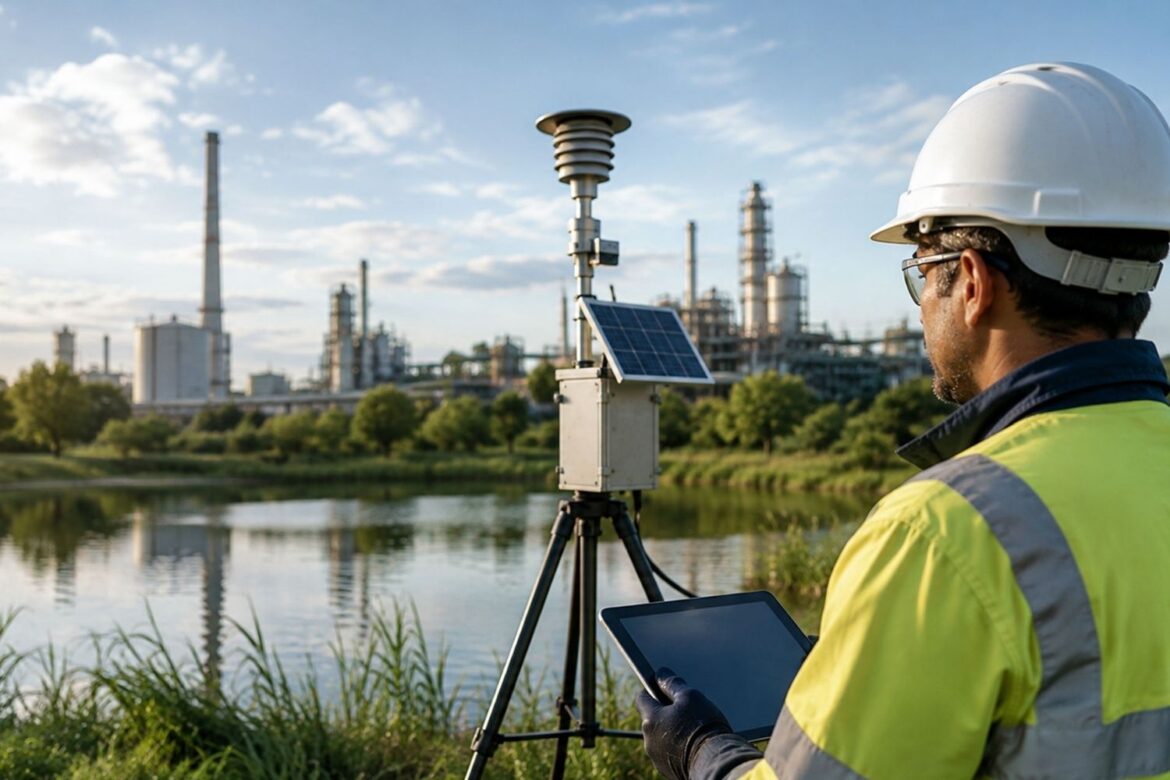
A workplace or facility may appear well controlled during a site inspection, but environmental conditions don’t remain static. Production volumes increase, equipment ages, weather patterns change and surrounding land use evolves. The conditions measured six months ago may not accurately reflect what is happening today.
This is where assumptions start to influence decision-making. Organisations tend to rely on previous results, visual observations or low complaint rates as evidence of effective controls. However, environmental conditions change gradually, making deterioration difficult to detect without structured monitoring.
Environmental monitoring services provide organisations with objective evidence about how a site is performing over time. Rather than confirming a single point in time, they build a clearer understanding of environmental trends, allowing businesses to identify emerging risks, evaluate control measures and make more informed HSE decisions before problems escalate. As a SANAS ISO/IEC 17020-accredited inspection body, Apex Environmental helps organisations build that evidence systematically.
Yesterday’s Conditions Don’t Describe Today’s Site
Environmental risk is constantly evolving because workplaces are always changing.
New equipment may alter noise levels. Increased production can generate additional dust or emissions. Seasonal rainfall may influence stormwater quality, while prolonged dry periods can affect dust generation. Even neighbouring developments or changing community boundaries may affect how environmental impacts are experienced outside a facility.
These aren’t changes that happen overnight. They develop gradually, usually without any obvious warning.
This is why environmental decisions can’t rely on historical reports or occasional inspections. Understanding current site conditions requires ongoing measurement that reflects how the workplace and its surrounding environment continue to change.
One Measurement Doesn’t Give You All the Information
A single environmental result answers one question: What happened here today?
A structured monitoring programme answers a far more valuable question:
What has been changing over time?
| Individual Measurement | Structured Monitoring Programme |
| Captures one moment | Identifies long-term trends |
| Provides a single result | Builds environmental intelligence |
| Confirms current conditions | Tracks changing site performance |
| Supports immediate reporting | Supports proactive planning |
This distinction is often overlooked. Individual measurements are important, but their value increases significantly when viewed alongside previous results, operational changes and environmental conditions.
As part of Apex Environmental’s environmental monitoring services, monitoring programmes are designed to provide organisations with meaningful evidence rather than isolated datasets.
Trends Reveal What Individual Results Can’t Show
Environmental conditions don’t fluctuate without reason. Dust fallout levels may increase as production expands. Water quality may change after seasonal rainfall or operational adjustments. Noise measurements may vary after new equipment is commissioned or existing machinery deteriorates. Air quality can also be influenced by changing weather conditions, maintenance practices or shifts in production activities.
Viewed individually, these results don’t appear significant. Examined collectively over time, they reveal patterns that help organisations understand how their operations are influencing environmental performance.
Trend interpretation transforms environmental data into practical decision-making information. Rather than asking whether a result passed or failed, organisations can start asking why conditions are changing and whether existing controls are effective.
Assumptions Create Environmental Blind Spots
Many organisations operate on the basis that a dust suppression system that worked well for years is still performing, or that low complaint rates and previously compliant results confirm current conditions are acceptable.
These assumptions may be reasonable, but without current measurement, they remain unverified. Environmental monitoring doesn’t replace operational experience. It validates it.
By comparing measured results against expected performance, organisations can determine whether controls function as intended or whether gradual deterioration has introduced new environmental risks.
Better Data Leads to Better Decisions
Good environmental data improves more than regulatory reporting.
When organisations understand where environmental conditions are changing, they can prioritise maintenance activities more effectively, focus resources where they’re needed most, and review whether existing control measures deliver the expected outcomes.
Instead of applying broad interventions across an entire facility, businesses can target specific operational areas where monitoring indicates performance is beginning to decline.
This evidence-based approach helps organisations prioritise maintenance more effectively, target specific areas where performance is declining, review whether controls are delivering expected outcomes and build a foundation for long-term environmental performance. It shifts monitoring from a compliance requirement into an operational management tool.
Environmental Monitoring in South Africa Requires Local Context
No two operating environments are exactly alike. Environmental monitoring in South Africa requires organisations to consider a wide range of factors, such as diverse industrial activities, changing climate conditions, surrounding communities, and the unique characteristics of each site.
South African environmental monitoring is governed by a framework of legislation, including the National Environmental Management Act (NEMA) 107 of 1998, the National Environmental Management: Air Quality Act (NEMAQA) 39 of 2004, the National Water Act 36 of 1998 and the National Noise-Control Regulations, each placing specific obligations on organisations to measure, report and manage their environmental impacts.
A monitoring programme that works effectively for a manufacturing facility may not be appropriate for a mining operation, wastewater treatment plant or logistics hub. Seasonal rainfall, prevailing wind conditions, neighbouring land use and local environmental sensitivities all influence how monitoring results should be interpreted.
This is why environmental data should always be evaluated within the context of the environment in which it was collected.
Understanding how environmental monitoring connects to broader workplace health obligations is explored in our article on occupational hygiene and workplace exposure management.
Interpretation Turns Data into Environmental Intelligence
Collecting environmental measurements is only one part of effective environmental management. The value comes from understanding what those measurements reveal about operational performance, environmental controls and emerging risks.
A compliant result may still indicate a gradual upward trend. A minor variation may point to equipment deterioration long before failures become visible. This is where interpretation becomes just as important as measurement itself.
Rather than producing reports that present environmental data, Apex Environmental helps organisations understand what that information means in relation to site activities, environmental performance and future decision-making.
Reliable environmental information supports stronger environmental awareness throughout an organisation. When employees understand how their activities influence environmental outcomes, environmental health training becomes more practical, relevant and effective because it reflects actual workplace conditions rather than generic guidance.
Better Environmental Decisions Start with Better Evidence
Environmental conditions continuously change, regardless of how stable an operation appears. Relying on historical reports, visual observations, or assumptions can leave organisations responding long after environmental impacts develop.
At Apex Environmental, monitoring goes beyond collecting measurements. Through scientific interpretation, trend analysis and practical reporting, organisations gain the environmental intelligence needed to make confident HSE decisions based on evidence rather than assumption.
Related Articles


Ways Environmental Monitoring Can Help Reduce The Carbon Footprint Of Industry

Building a Safety-First Culture: the Importance of Regular Health and Safety Training

Combatting Heat Stress in the Workplace: Prevention Strategies for Outdoor Workers

The impact of the pandemic on mental health and well-being of workers and its relation to occupational hygiene