


Most discussions about Legionella start with water quality. While water provides the environment for Legionella bacteria to exist, it’s rarely the only reason the risk develops in the first place.
Legionella risk is more accurately understood as the result of multiple system conditions interacting over time. Poor temperature control, stagnant water, inadequate maintenance and ineffective system design all create opportunities for bacteria to grow and spread unnoticed. By the time contamination is detected, the underlying conditions that allowed it to develop have often been present for weeks or even months.
Legionella Risk Is a Symptom of System Failure
As explored in Understanding Legionella Risks, Prevention and Water Safety Measures, Legionella doesn’t suddenly appear because water quality deteriorates overnight. In most cases, bacterial growth is encouraged by environmental and operational conditions that gradually develop within water systems.
Poor circulation, inconsistent temperatures, accumulated biofilm and areas of stagnant water create an environment where bacteria can survive and grow. These conditions develop slowly, making them difficult to detect through routine visual inspections alone.
| System Condition | Why It Increases Legionella Risk |
| Water stagnation | Allows bacteria to multiply in low-flow areas |
| Poor temperature control | Creates conditions favourable for bacterial growth |
| Biofilm development | Protects bacteria from disinfectants and encourages colonisation |
| Scale and sediment | Provide surfaces where bacteria can establish |
| Inadequate maintenance | Allows system conditions to deteriorate over time |
| Poor system design | Creates dead legs and areas of limited circulation |
Understanding these system conditions allows organisations to move beyond reacting to contamination and towards preventing it before exposure becomes a concern.
What the Hazardous Biological Agents Regulations Mean in Practice
The Hazardous Biological Agents Regulations provide a framework for identifying, assessing and controlling biological hazards that may affect employees. Rather than focusing solely on the presence of microorganisms, the regulations encourage organisations to evaluate how exposure may occur and what practical measures are required to reduce that risk.
In the context of Legionella, this means looking beyond laboratory results and considering how water systems are designed, maintained and operated. Cooling towers, hot and cold-water systems, storage tanks, and HVAC infrastructure all require ongoing management because biological risks develop in response to changing environmental conditions rather than isolated events.
Where biological exposure forms part of broader workplace health management, Apex Environmental also provides specialised Hazardous Biological Agents services to help organisations proactively identify and manage these risks.
Legionella Develops Gradually, Not Suddenly
One of the biggest misconceptions surrounding Legionella risk is that contamination occurs out of the blue. In reality, the conditions that support bacterial growth often develop over extended periods through gradual changes within the system.
Temperature fluctuations may occur as equipment ages. Pipework modifications can create stagnant sections where water movement is limited. Reduced building occupancy may increase water stagnation, while maintenance intervals may gradually lengthen as operational priorities shift.
This is why regular inspections and structured monitoring programmes are often more valuable than relying solely on reactive testing after concerns have already been raised.
Testing Identifies the Outcome – Risk Assessments Identify the Cause.
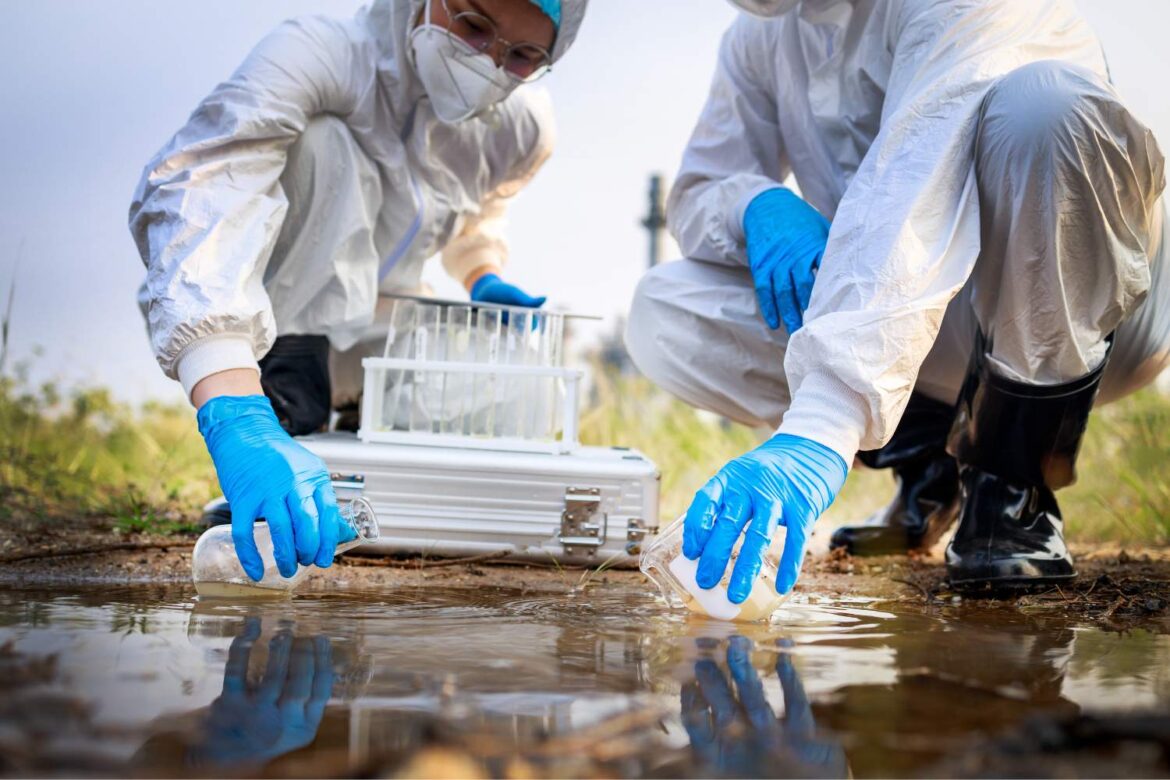
Water sampling plays an important role in confirming whether Legionella is present, but testing alone can’t explain why contamination occurred or whether similar conditions may develop elsewhere in the system.
An effective Legionella management programme combines monitoring with a structured assessment of the entire water system.
Prevention Starts with Understanding the System
Effective Legionella management focuses on preventing favourable growth conditions rather than responding only after contamination has been identified.
This includes maintaining appropriate water temperatures, minimising stagnation, managing biofilm and sediment build-up, reviewing system modifications and implementing routine maintenance programmes appropriate to the facility.
A structured Legionella Risk Assessment provides organisations with a clearer understanding of where these vulnerabilities exist in their systems and what practical controls can reduce the likelihood of bacterial growth.
By identifying system weaknesses early, organisations can implement preventative measures that protect employees, building occupants and visitors while supporting long-term compliance.
Why Legionella Requires an Integrated Approach
Legionella risk rarely exists on its own. Water management, maintenance practices, environmental monitoring, and occupational hygiene all contribute to the conditions that determine whether bacteria can survive and spread.
Managing these factors as independent activities can leave important gaps. An integrated approach provides a more complete understanding of how environmental conditions interact across the workplace and where improvements will have the greatest impact.
As part of its broader environmental monitoring services, Apex Environmental helps organisations assess not only whether Legionella may be present, but also why conditions have developed and how they can be managed more effectively over time.
Legionella Risk Starts Long Before Detection
Legionella isn’t just another water quality issue. It’s usually the result of multiple systemic conditions that have gradually created an environment in which bacteria can thrive.
Organisations that focus only on testing may confirm whether contamination exists at a single point in time, but they risk overlooking the operational and environmental factors that allowed it to develop.
By understanding how water systems function, identifying vulnerabilities early and implementing structured monitoring and maintenance programmes, businesses can move from reactive testing to proactive risk management. Reducing Legionella risk isn’t about treating the water alone, but about managing the systems that support safe, healthy and compliant workplaces.
| Assessment Activity | Purpose |
| Temperature monitoring | Verify that temperatures remain outside favourable growth ranges |
| System inspections | Identify stagnation, dead legs and poor circulation |
| Maintenance reviews | Confirm systems are being managed effectively |
| Water sampling | Verify whether bacterial contamination is present |
| Corrective actions | Address the underlying conditions contributing to risk |