


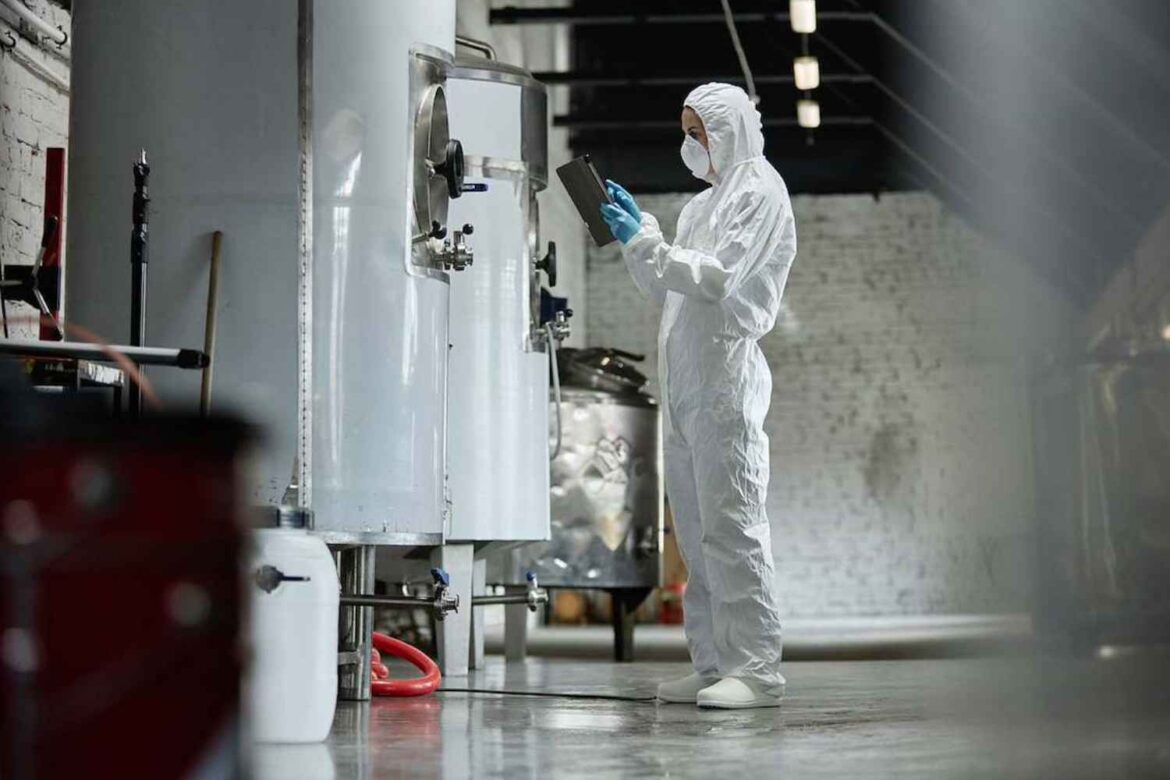
Most cancer awareness campaigns focus on screening. If you catch it early, know what to look for, and don’t ignore persistent coughs – you can act faster, which is all true, and downstream of the actual point. Before any diagnosis is even made, someone is still handling hazardous chemical agents with the incorrect PPE, welding without extraction, or working near fumes nobody has considered measuring in years.
That’s the stage HSE management can actually act on, and it’s the stage occupational cancer prevention keeps skipping over.
The Timeline of Occupational Cancer Risk
Occupational cancer risks don’t generally trace back to one bad day. It’s usually built over years of repeated, low-level contact with hazardous chemical agents that never produced any obvious immediate symptoms.
A solvent absorbed through the skin during a quick five-minute task, repeated twice a shift for a decade, carries a much different risk profile than a single spill that sends someone to the emergency room.
The spill is investigated immediately, and safety training follows afterwards. A decade of small, repeated contact doesn’t get the same treatment, because nothing about it looks like an emergency or warrants a new slate of training material. This is precisely the gap occupational hygiene services are built to close: measure what quietly accumulates, not just responding to what goes wrong visibly and loudly.
Routine Doesn’t Mean the Same Thing as Safe
Think about how a chemical becomes background noise. When it’s handled daily, stored in the same cabinet for years, and present at concentrations too low to smell or burn skin, it no longer registers as a hazard at all.
Employees adapt to a task, not a risk profile, and those are two very different things to look at. Just because it doesn’t hurt today doesn’t mean that nothing is accumulating.
The Variables That Determine Exposure
Whether a substance is an actual risk in a workplace depends on far more than its name on a safety data sheet laminated to the wall. It depends on:
Chemical form: vapour, dust, gas, or liquid
Concentration: on surfaces and in the air
Exposure routes: ingestion, inhalation or skin absorption
Exposure length: how long and how often contact occurs
Task conditions when handling substances
Different workplace risks can arise from using the same chemicals – no two workplaces will have the same kind of risk levels. It all depends on how these variables combine on any given day.
Why Regulations Exist Beyond Compliance
The Regulations of Hazardous Chemical Agents, 2021 aren’t a form to complete once and file away. When read as intended, these regulations set out preventative systems to assess where exposure is most likely, train people before they’re exposed, control the release of chemical agents at the source, monitor where necessary, and provide appropriate protection.
Treating these regulations as a simple checklist completely misses the point. Their purpose is to catch exposure risk before it becomes disease, which is a considerably harder task than ticking a small box.
A Name Change with Real Legal Weight
Older paperwork and supply documentation may still refer to the hazardous chemical substances regulations, which applied until 2021. That name is history, not current law. The regulations for hazardous chemical agents replaced it and broadened its scope, aligning South Africa with internationally recognized chemical classification standards.
An update has been drafted and is still out for public comment; it hasn’t been finalised or brought into force. It is worth bearing in mind that these regulations may change, while the 2021 regulations remain applicable.
Inventory Isn’t an Exposure List
Simply knowing which hazardous chemical substances are on site is the easy part. The supplier safety sheet and stock list will tell you that much with just a glance.
What they don’t tell you is where those agents are released during a task, who stands close enough to be affected, whether existing controls are functioning as intended, or whether a shortcut in daily practice is increasing exposure beyond what that paperwork stipulates. This is where Hazardous Chemical Agent Risk Assessment & Monitoring does the work that an inventory list can’t: connecting what’s on the list with what’s actually happening in the workplace.
Where PPE Fits, and Where It Doesn’t
Respiratory protection is often the default response to chemical exposure. Generally, because it’s visible and easy to put on, it’s also the last line of defence. The properly applied hierarchy of protection controls works through the options in a very different order:
Substitution: replace a hazardous agent with a less harmful one
Enclosure: contain processes to ensure the agent doesn’t reach breathing zones
Local exhaust ventilation: remove contaminants at the source
Process changes: adjust how tasks are performed to reduce release
PPE: the final layer once the above have been considered
PPE is still a necessary measure for many workplaces, but it shouldn’t compensate for an entire exposure pathway nobody bothered to understand and control.
To examine where PPE truly belongs in workplace processes, we cover it in depth in “Ensuring Worker Safety: The Importance of PPE.”
Prevention Starts Today, Not at Diagnosis
Occupational cancer prevention never starts in the doctor’s office. It starts on a very normal Wednesday, during a task someone’s done the same way for the past 15 years, with hazardous chemical agents no one’s really measured recently because nothing has gone wrong.
Apex Environmental’s Occupational hygiene services exist to close that specific gap. Through assessments, monitoring, interpretation, and practical recommendations that move a business from knowing what’s on-site to deeply understanding what that presents and what it’s doing to employees working with it.
The real question isn’t whether your business handles hazardous substances. Many do. It’s about whether anyone has recently and thoroughly checked what handling these substances is costing employees over time.