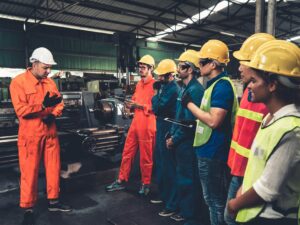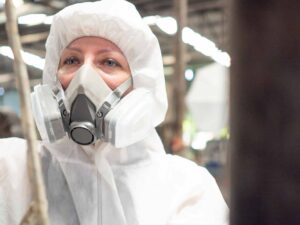


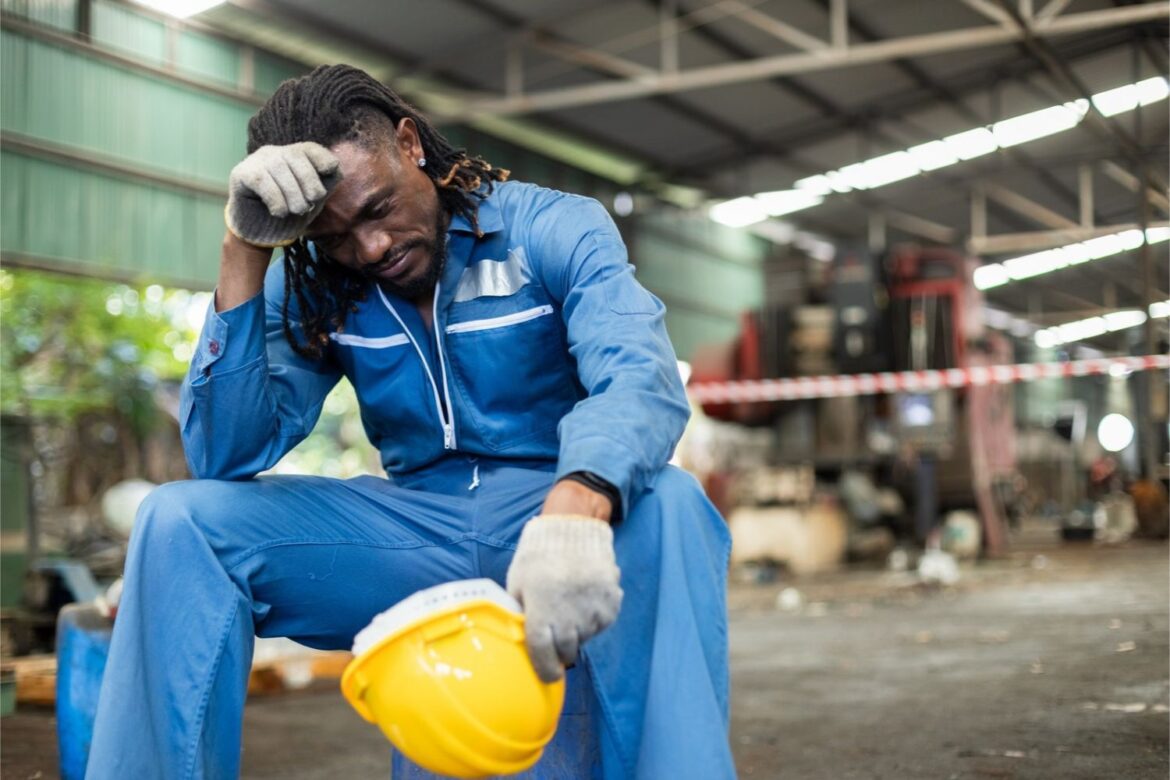
Just ask any site supervisor what “coping well” looks like on a brutal summer shift, and the answer hardly ever is the man who stops to say he feels a bit dizzy. It’s the one who never says a thing. Keeps on lifting, keeps driving, keeps on welding, without a word. On many South African sites, that silence reads as strength and being ‘a man on the job’.
It isn’t. It’s usually just the first sign that heat risk has already outpaced whatever controls were supposed to catch it. This is where we address men’s health and what a heat stress assessment means for employee health and culture as a preventative measure.
“Tough It Out” Still Passes for Safety Culture
Because it’s common for construction, logistics, manufacturing, mining, and outdoor operations workers to experience thirst, headaches, dizziness, and unusual fatigue, it’s often filed under “part of the job” before anyone calls it a symptom.
That kind of assumption is shaped by workplaces that reward endurance, discourage interruption, and treat an admission of discomfort as an admission that someone is incapable of handling the work.
Genuine thermal stress prevention must start by naming that culture honestly, not by making another assumption about every worker who says nothing has nothing to report. This is exactly where proper occupational hygiene services earn their place, by measuring what the culture itself has trained people to stay quiet about.
Waiting for Someone To Say, “I’m Not Okay” Is Already Too Late
Relying on a worker to self-report distress is a weaker control than most HSE systems like to admit. Heat strain affects concentration, judgement, and physical coordination before the person experiencing it can grasp how serious it is.
The faculties needed to recognise and report the problem are the first ones compromised. Add to that a reluctance to slow production, burden a teammate, or be seen as the one who couldn’t keep pace, and you get a dangerous lag between when real risk appears and when anyone intervenes.
This isn’t speculation about how men in physically demanding industries behave. A 2025 pilot study from Oxford University examined construction workers and the behavioural and cultural factors that shape their decisions to continue working despite symptoms of heat strain. While most were aware of heat-related health risks, many continued to work through their symptoms.
Separate academic research into masculine workplace cultures has reached a similar conclusion from another angle: conventional masculine norms built around self-reliance, autonomy and physical endurance shape how men in male-dominated industries engage with their own health and wellbeing at work. While this research may not be South African, the pattern it documents is one more reason why “I’m fine” can’t be treated as evidence that anything is actually under control.
Collapse Isn’t Always Where It Starts
Most heat-related incidents don’t start with someone going down. They start up more gradually, with a slower pace, shorter replies, a missed step in a sequence someone’s done a hundred times, or a decision that would normally have been obvious taking longer than it should. On a site where heat exposure becomes background noise, those changes are dismissed as tiredness, distraction or a bad attitude more often than they are seen as early signs of heat strain.
That misreading also determines what happens next. A supervisor, assuming an attitude, tells someone to pick up the pace. A supervisor who recognises early strain pulls them into shade and asks questions.
The specific symptoms to watch for and what distinguishes early strain from a genuine emergency are covered in Heat Stress: Causes, Symptoms, and Prevention, which is worth keeping close at hand for any supervisor making that call in real time.
Replace Assumptions About Tolerance with a Heat Stress Assessment
Subjective judgement, even well-intentioned from an experienced supervisor, has limits that a structured heat stress assessment doesn’t.
Environmental conditions, metabolic workload, clothing and PPE, exposure frequency and duration, adjustment periods, and whether recovery time is built into the day all shape individual risk in different ways.
Two employees standing in the same temperature, doing superficially similar work, can carry very different levels of thermal strain. A heat stress assessment replaces assumptions about who can handle the heat with evidence of what the work itself demands.
Apex Environmental’s Thermal Stress Risk Assessments and Monitoring are built around exactly that distinction.
What HSE Leadership Looks Like Beyond “Drink Water”
Telling employees to hydrate and report symptoms is necessary, but not a heat-risk management system. Real HSE leaders build clear work-rest arrangements, train supervisors to recognise strain, plan recovery into the shift, and run proper acclimatisation for new or returning workers.
It’s not only for outdoor compliance: the same recovery and acclimatisation thinking applies to indoor spaces where heat builds with poor ventilation. An early reporting culture should mean responsible judgement, not weakness. The one shift no thermal stress assessment can deliver on its own.
“I’m Fine” Was Never a Reliable Control System
A worker’s statement that they’re fine isn’t proof that heat exposure is manageable. Usually, it’s proof that the culture around them made anything else hard to say. Strong HSE systems don’t wait around for that sentence to fail.
Heat risk is identified before anyone feels pressured to push through. Using a heat stress assessment to replace assumptions with tangible, verifiable evidence is how thermal stress is properly addressed.
The real test for any HSE programme this summer isn’t whether your team knows to report symptoms. It’s whether your culture has made that easy to do.