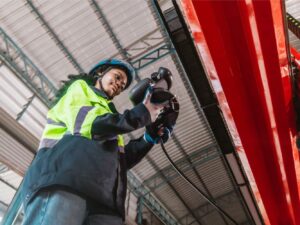



Each year, World Health Day encourages organisations and communities to reflect on what protecting our health truly means. While conversations often focus on access to healthcare or lifestyle factors, the environments where people spend most of their time, including workplaces, play an equally important role in shaping long-term health outcomes.
Workplace environments can expose employees to various physical, chemical and environmental factors that can affect their long-term health. These workplace health risks aren’t always immediately visible, which makes them all too easy to overlook. Headaches, fatigue, respiratory irritation or reduced concentration may appear to be completely unrelated to work setting conditions, and yet they are directly linked to the quality of the working environment itself.
This is where occupational hygiene plays its guiding role. By identifying, measuring and managing environmental hazards, occupational hygiene helps organisations prevent risk exposure before it even develops into a health issue.
Why Workplace Health Risks Are Not Always Obvious
Unlike physical injuries or visible safety risks, environmental exposures typically don’t produce instant warning signs. Symptoms often develop gradually as employees interact with their surroundings over weeks, months or even years.
Airborne contaminants, excessive noise, poor ventilation or extreme temperatures can affect concentration, energy levels and overall well-being long before they become recognised occupational health concerns. These workplace health risks often stay hidden until employees start to experience symptoms or long-term health effects.
The South African occupational health guidelines also emphasise the importance of environmental monitoring and workplace risk assessments in preventing occupational illnesses. The South African Department of Employment and Labour emphasises that identifying and controlling environmental hazards like excessive noise levels, airborne contaminants and temperature stress is a key component of protecting worker health in workplaces.
Managing Environmental Risks Through Monitoring
Because many workplace hazards develop gradually, identifying them early requires more than observation alone. This is where structured environmental monitoring becomes essential.
Monitoring environmental conditions is one of the most effective ways to identify potential health risks before they escalate into serious occupational health concerns.
- For instance, noise exposure monitoring helps organisations understand whether employees are exposed to sound levels that may affect their hearing or increase fatigue during long shifts.
- In the same sense, evaluating airflow conditions through ventilation assessments helps to determine whether indoor environments are adequately filtering airborne contaminants and maintaining healthy air circulation.
- Temperature conditions also play an important role when evaluating employee safety. In certain industries, employees may be exposed to heat or cold environments that place excessive stress on the body, making thermal stress risk assessments an essential part of processes to protect worker health.
When these environmental factors are assessed together, organisations gain a comprehensive picture of how their workplaces truly affect employee wellbeing.
When Workplace Health Risks Affect People Differently
While workplace health protections are designed to safeguard all employees on site, research increasingly shows that environmental exposures may affect individuals differently depending on physiology, occupational roles, and working conditions.
Historically, many occupational exposure limits and safety standards were developed using data from male-dominated workforces. But as industries continue to diversify, occupational health professionals are recognising the importance of understanding how environmental hazards, such as chemical exposure, ventilation quality, noise levels and temperature stress, may interact differently with the health needs of diverse workforces.
For example, laboratory research examining formaldehyde exposure has highlighted how certain chemical exposure settings may intersect with the hormonal health considerations of women in laboratories, emphasising the importance of careful monitoring and preventative controls in workplace environments.
Recognising these differences does not change the goal of occupational hygiene. Instead, it is an opportunity to strengthen it by ensuring that workplace health protections are effective for everyone and take into account how risks affect men and women differently.
Creating Healthier and More Inclusive Workplaces
Creating healthy working environments also requires more than just ensuring regulatory compliance. It also involves recognising that employees interact differently with their surroundings and that protecting health means understanding those differences.
Occupational hygiene supports this overall goal by providing the scientific and regulatory framework needed to identify environmental hazards and implement effective controls to prevent them. It’s the discipline dedicated to anticipating, recognising, evaluating and controlling environmental factors that may affect employee health. By monitoring exposure levels, analysing environmental conditions and addressing emerging risks, organisations can safely reduce long-term health impacts while improving the overall comfort and safety of employees in the workplace.
Supporting women in occupational hygiene and workplace safety initiatives is also an important step toward building a more inclusive environment where health risks are recognised and addressed for everyone.
Prevention as the Foundation of Workplace Health
The most effective occupational health strategies are those that are proactive and preventative. Rather than waiting for severe symptoms or serious incidents to occur, proactive risk exposure monitoring allows organisations to identify different health and safety hazards early and implement corrective measures before employees are affected.
When businesses invest in occupational hygiene practices, they demonstrate a commitment to protecting people as well as maintaining safe and sustainable operations. But perhaps more importantly, they help ensure that the environments where people spend most of their time working every day contribute to their health instead of compromising it.
As World Health Day reminds us, protecting health requires attention to the environments we live and work in, just as much as it addresses medical care. Many workplace health risks aren’t dramatic or immediately visible. They tend to develop quietly over time, which is exactly why recognising and managing them early is so important.
By recognising and addressing hidden workplace health risks early on, organisations can create safer, more inclusive workplaces that support the well-being of every employee.