


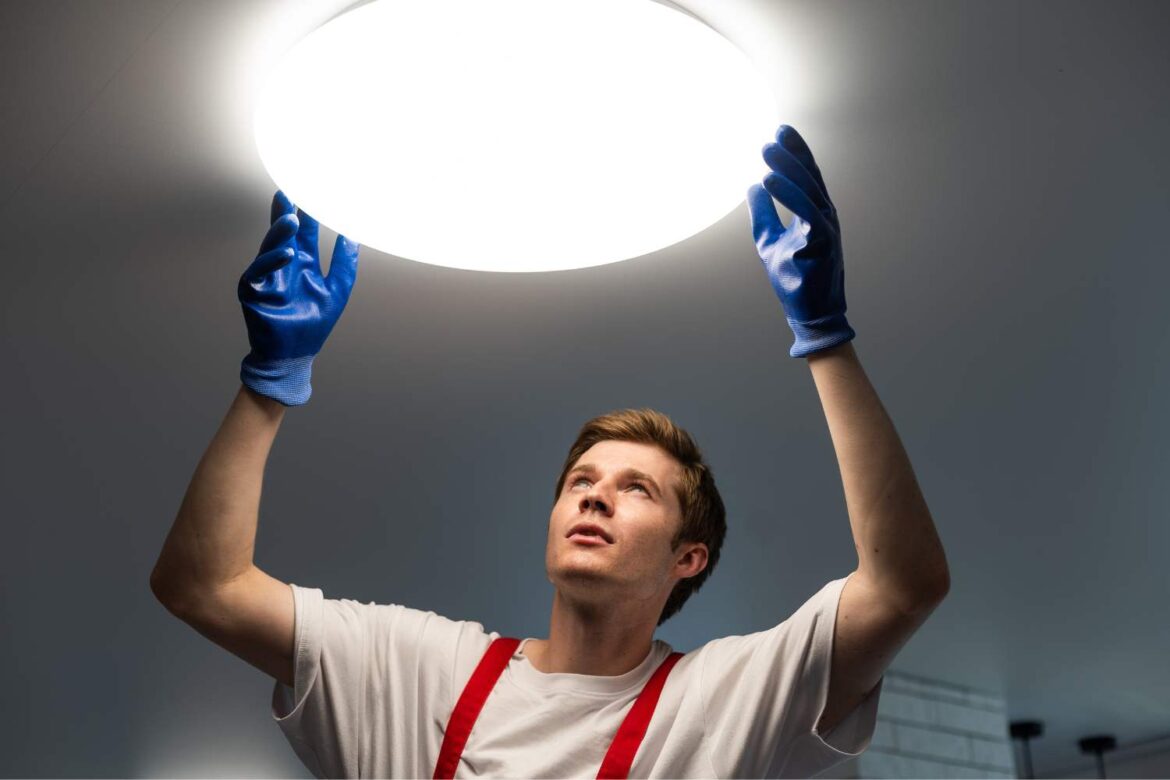
Good workplace lighting is often taken for granted, yet it is one of the most important factors in preventing injuries and maintaining a safe, productive working environment.
In South Africa, lighting requirements fall under the Occupational Health and Safety Act, 1993 (OHSA), which imposes a general duty on employers to provide a workplace that is safe and free of risks to employee health.
This article breaks down what that means in practical terms, why lighting matters, and what employers are expected to do to stay compliant.
Why Lighting Matters for Workplace Safety
Lighting is not just about being able to see—it directly affects how safely and efficiently people work.
Poor lighting can lead to:
- Slips, trips, and falls
- Incorrect use of tools or machinery
- Eye strain and headaches
- Fatigue and reduced concentration
- Increased workplace accidents
In simple terms, if employees cannot see properly, they cannot work safely.
What the Law Says in South Africa
The Occupational Health and Safety Act, 1993, requires employers to provide a working environment that does not endanger employees.
While the Act itself is broad, it is supported by regulations (including workplace environmental requirements) that specifically address lighting.
Employers must ensure that:
- Work areas are adequately lit for the task being performed
- Lighting does not create glare or harsh shadows
- Emergency lighting is available where needed
- Lighting systems are maintained and kept in good working condition
Importantly, “minimum light” is not enough—the lighting must be suitable for the type of work being done.
Types of Workplaces and Lighting Needs
Different work environments require different lighting levels:
Offices
Offices need balanced lighting that reduces screen glare and prevents eye strain. Too much or too little light can both cause discomfort.
Industrial Areas
Factories and workshops require stronger, more focused lighting due to machinery and higher-risk activities.
Warehouses
Warehouses need consistent lighting across aisles and storage areas to prevent forklift accidents and handling errors.
Laboratories and Inspection Areas
These environments require precise lighting to ensure accurate testing and inspection.
Common Lighting Problems in Workplaces
During inspections and audits, lighting is often found to be non-compliant due to simple but risky issues such as:
- Broken or blown light fittings not replaced
- Flickering lights left unattended
- Poor lighting in corners or storage areas
- Temporary lighting used as a permanent solution
- Emergency lights not tested regularly
- Blocked natural light sources
Even minor lighting issues can pose serious safety risks if ignored.
The Real Impact of Poor Lighting
Beyond compliance, lighting has a direct impact on people and performance.
Safety Impact
Poor lighting increases the likelihood of accidents, especially in high-traffic or high-risk areas.
Health Impact
Employees may experience:
- Eye fatigue
- Headaches
- Difficulty focusing
- Increased stress levels
Productivity Impact
Studies show that better lighting can significantly improve accuracy and productivity, as workers make fewer mistakes and feel less fatigued.
Interesting Facts About Workplace Lighting
Here are some useful insights often overlooked in workplace safety:
- Light affects the body’s internal clock (circadian rhythm), influencing alertness and sleep quality.
- Well-lit workplaces can improve productivity by up to 20%.
- LED lighting is now the preferred standard due to energy efficiency and longer lifespan.
- Glare is one of the most common causes of visual discomfort in offices and industrial spaces.
- Poor lighting is a major contributing factor in repetitive strain and fatigue-related incidents.
What Employers Should Do (Best Practice)
To stay compliant with the Occupational Health and Safety Act, 1993, and ensure a safe workplace, employers should:
- Conduct regular lighting inspections
- Replace faulty lights immediately
- Ensure lighting matches the task requirements
- Test emergency lighting on a routine schedule
- Keep maintenance records
- Include lighting in workplace risk assessments
- Encourage employees to report lighting issues
Lighting should never be treated as a once-off installation—it requires ongoing attention.
Final Thoughts
Lighting is one of the simplest yet most effective safety controls in any workplace. Under South African occupational health and safety law, employers have a clear responsibility to ensure that lighting is adequate, safe, and properly maintained.
When lighting is done correctly, it reduces accidents, improves employee well-being, and supports better productivity. When it is neglected, it becomes a hidden hazard that can contribute to serious incidents.
In short: good lighting is not just about visibility—it is about safety, compliance, and care for the people doing the work.




 )