

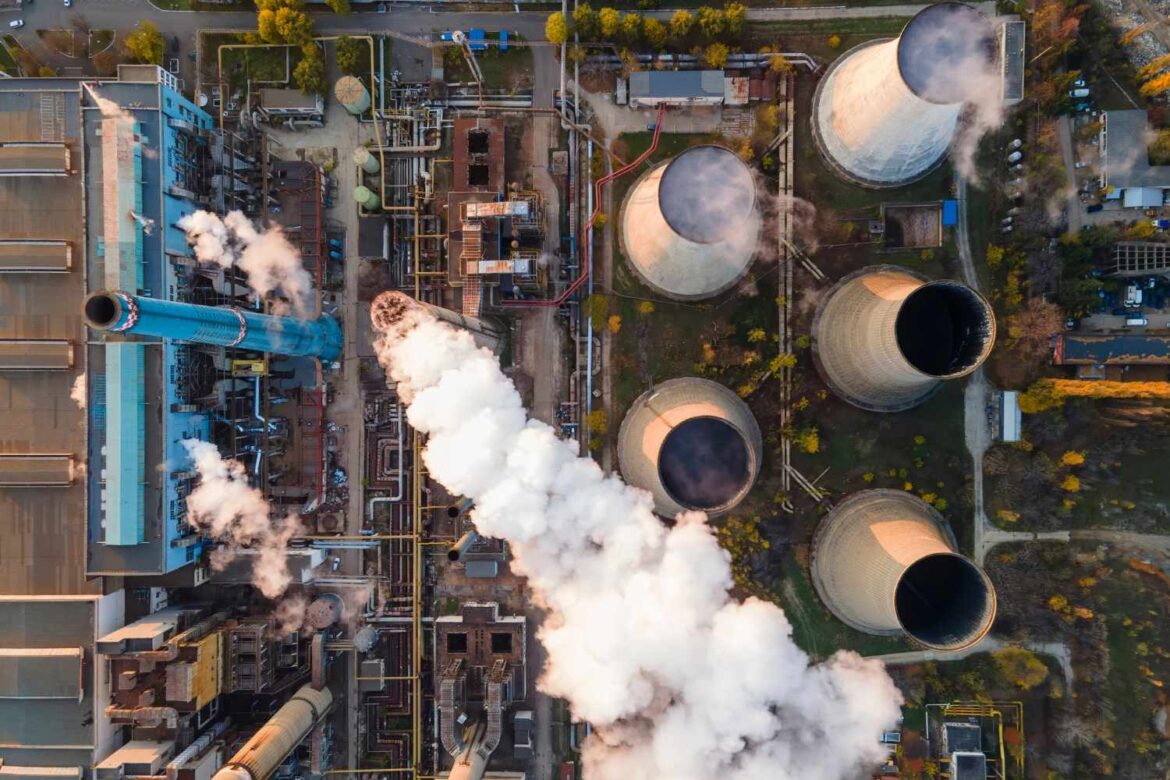
Air quality has become a growing concern in South Africa. From industrial hubs like the Vaal Triangle to dense urban centres such as Durban and Johannesburg, poor air quality affects both public health and the environment. Communities are becoming increasingly aware of the smog, dust, and odours that fall part of the issue at large: AIR POLUTION.
Emission Testing is one of the most effective tools for managing this challenge. By measuring what industries release into the atmosphere, authorities and operators gain a clear picture of pollution levels and whether they fall within acceptable limits. Without accurate testing, enforcement and improvement is impossible.
In this article, we will explore the purpose of emission testing, the different types of emissions that are measured, and most importantly, the South African legislation that governs emission control. By the end, you will have a clearer view of not only why emission testing matters, but also the legal responsibilities that industries and municipalities must adhere to.
What Is Emission Testing?
At its core, emission testing involves the measurement of pollutants released from a designated point source into the air. These sources fall broadly into two categories:
– Stationary sources such as factories, refineries, boilers, incinerators, and power plants.
– Mobile sources such as motor vehicles, ships, and off-road machinery.
Testing is typically conducted using specialised equipment that sample gases or particulates in exhaust streams or stacks. The results are compared against regulatory limits, allowing authorities and operators to assess compliance.
Pollutants that are typically measured during emission testing include:
– Particulate matter (PM₁₀ and PM₂.₅): tiny airborne particles that can lodge deep into the lungs.
– Sulphur oxides (SO₂ and SO₃): mainly produced from burning coal and oil, contributing to acid rain.
– Nitrogen oxides (NOx): generated from high-temperature combustion, contributing to smog and ozone formation.
– Carbon monoxide (CO): a toxic gas produced during incomplete combustion.
– Volatile organic compounds (VOCs): chemical vapours that can form secondary pollutants.
– Greenhouse gases (CO₂, CH₄, N₂O): drivers of climate change.
Why Is Emission Testing Important?
Emission testing is not merely just a regulatory requirement. It is central to protecting the environment and society in the following ways:
- Protecting human health
Airborne pollutants are linked to asthma, lung cancer, cardiovascular disease, and premature death. In South Africa, respiratory conditions are a leading health burden, especially in children and the elderly. - Safeguarding the environment
Pollutants such as SO₂ and NOx contribute to acid rain, which damages crops, soils, and aquatic systems. Fine particulates reduce visibility and settle onto surfaces, degrading ecosystems. - Ensuring regulatory compliance
Industries and municipalities are legally obliged to meet emission standards. Routine testing ensures industries stay within the law, avoiding penalties. - Improving efficiency and reliability
Regular monitoring can highlight equipment inefficiencies, leaks, or poor combustion practices. Correcting these issues can reduce emissions and save costs. - Promoting accountability
Public reporting of emissions builds community trust and demonstrates a company’s commitment to sustainability.
The South African Legal Framework
South Africa has developed a comprehensive set of laws and standards to manage air quality. At the heart of this framework is the National Environmental Management: Air Quality Act, 2004 (Act No. 39 of 2004) commonly known as the Air Quality Act (AQA).
The National Environmental Management: Air Quality Act (AQA)
The AQA is the cornerstone of emission regulation in South Africa. It replaced the outdated Atmospheric Pollution Prevention Act of 1965, introducing a modern and integrated approach. Its objectives are to:
– Protect and enhance air quality.
– Prevent air pollution and ecological degradation.
– Promote sustainable development by balancing economic growth with environmental protection.
Under the AQA:
– Section 21: Listed Activities – The Minister of Forestry, Fisheries and the Environment published a list of activities that require strict emission control. These include metal smelting, cement manufacturing, and chemical production.
– Minimum Emission Standards (MES): These are specific legal limits for pollutants, published in Government Notices such as GN 893 of 2013 and subsequent amendments.
– Atmospheric Emission Licences (AELs): Any facility undertaking a listed activity must obtain an AEL from its local licensing authority. The licence will stipulate emission limits, monitoring requirements, and reporting duties.
National Ambient Air Quality Standards (NAAQS)
While the AQA sets emission limits for individual industries, the National Ambient Air Quality Standards regulate the concentration of pollutants in the broader environment. Published in terms of Section 9 of the AQA, these standards set maximum allowable levels for pollutants such as NO₂, SO₂, O₃, CO, benzene, lead, and particulate matter.
Municipalities are responsible for ensuring that these standards are not exceeded in the air that communities breathe. Emission testing from industries helps authorities determine whether these ambient standards are being met.
Air Quality Management Plans (AQMPs) and Municipal By-Laws
Local governments play an essential role under the AQA. Municipalities are required to prepare Air Quality Management Plans (AQMPs) and implement air quality by-laws to manage local pollution sources.
For example:
– The City of Johannesburg has introduced programmes for roadside vehicle emission testing.
– The City of Cape Town enforces municipal by-laws that require permits for certain small-scale fuel-burning equipment.
Municipal AQMPs often rely heavily on emission inventories and stack emission testing data to plan interventions.
Vehicle Emission Controls
Unlike some countries, South Africa does not have a nationwide annual vehicle emissions testing programme. However, measures are in place to limit pollution from vehicles:
– New vehicle standards: The National Road Traffic Act and related SANS (South African National Standards) specify exhaust emission requirements for newly manufactured or imported vehicles.
– Fuel quality regulations: Cleaner fuel standards (such as low-sulphur diesel) are mandated under the Petroleum Products Act, 1977, reducing emissions at the source.
– Municipal initiatives: Some metros, like Johannesburg and Tshwane, conduct roadside vehicle emission tests as part of enforcement campaigns.
Enforcement and Penalties
The AQA gives authorities strong enforcement powers. Failure to comply with emission standards, licence conditions, or reporting duties can lead to:
– Administrative penalties and fines.
– Suspension or withdrawal of an AEL, effectively shutting down an operation.
– Criminal prosecution, which can result in imprisonment in severe cases.
These provisions emphasise the seriousness with which air quality management is treated in South Africa.
The Future of Emission Testing in South Africa
As South Africa continues to balance economic and industrial growth with environmental protection, emission testing will become increasingly important. Key future trends include:
– Stricter emission standards in line with global best practice.
– Expansion of air quality monitoring networks, particularly in under-monitored rural areas.
– Potential adoption of routine vehicle testing, which would help address emissions from South Africa’s aging fleet.
– Greater public transparency, with emissions data becoming more accessible to communities.
Conclusion
Emission testing is a cornerstone of South Africa’s environmental management framework. It not only ensures legal compliance but also safeguards public health, protects ecosystems, and promotes sustainable development.
The Air Quality Act, National Ambient Air Quality Standards, and municipal by-laws collectively create a robust system of control. While challenges remain — particularly in enforcement capacity and vehicle emissions, the direction is clear: South Africa is steadily moving towards cleaner air.
For businesses, municipalities, and individuals, emission testing should not be seen as a burden but as an essential responsibility in building a healthier, more sustainable future for all South Africans.